

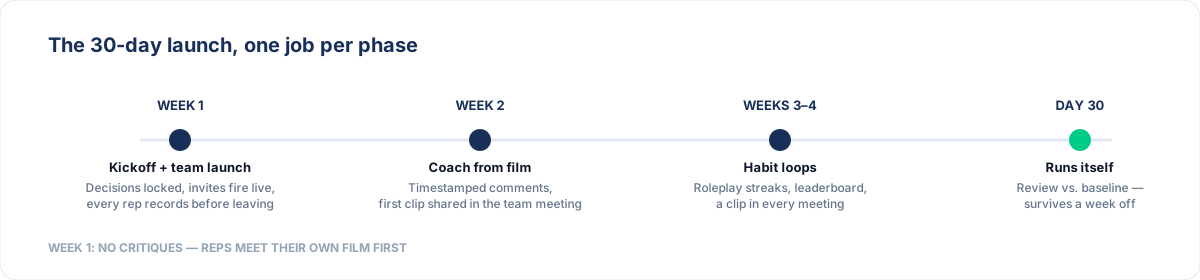
A kickoff meeting alone will fail. Repeated manager actions create adoption. Treat the first 30 days as a campaign you run, with a plan for each phase.
Before day 1: preparation
- Meet 1:1 with your most influential reps and your most resistant ones. Win them privately before you present publicly.
- Align the scorecard to your actual sales process, in your terminology.
- Train one homeowner recording explanation (from Lesson 2).
- Establish a baseline: close rate, average ticket, and appointment volume for the prior 30 days. Day 30 is measured against this.
Then run the launch session itself — the handbook’s run-of-show covers it minute by minute.
Week 1: practice
- Get every rep comfortable starting and completing recordings.
- Feedback on wins and simple adjustments only.
- Resolve field workflow problems fast — a permissions issue left for three days reads as permission to stop.
- Hold back on scores. No overload.
Weeks 2-4: reinforce
- Start weekly self-review: reps watch their own film before you do.
- Share positive clips and hold focused 1:1s.
- Recognize improvement publicly.
- Introduce the competition.
The competition
An example structure that works:
- 70%+ recording coverage to qualify. The competition rewards the behavior first.
- Greatest close-rate improvement wins. Improvement, so your veterans and your rookies both have a shot.
- A real prize ($500 works).
- Practice first, then measure. Launch it in week 3, after the habit exists.
This is one example; design your own around what motivates your team. The qualification-by-coverage mechanic is the part to keep.
Measure behavior first, then performance
Leading indicators (is the system being used?): % of eligible appointments recorded, % of reps reviewing their own appointments, % receiving weekly coaching, manager comments and clips shared, key sales-process steps completed.
Outcome indicators (is it working?): close-rate improvement by rep and team, average ticket movement, scorecard behaviors improving, unsold opportunities recovered, differences between locations.
Leading indicators move in weeks; outcome indicators move in months. Judge the rollout on the first set, the investment on the second.
Your five commitments
- Record every eligible appointment.
- Review appointments within 24 hours.
- Coach one behavior at a time.
- Bring one positive clip to each team meeting.
- Review the first 30 days against the baseline.
The goal is better execution while the job is still winnable.
Do this week
Write down your baseline numbers and put the day-30 review on the calendar now, before the launch. A dated commitment is what separates a campaign from a kickoff.
Next: Lesson 6 — 1:1s, Team Meetings, and the Culture of Winning