

The launch gets recordings flowing. The cadence is what turns them into a better team. It’s deliberately light: a few minutes a day, one review block a week, and a team meeting that now has film in it.
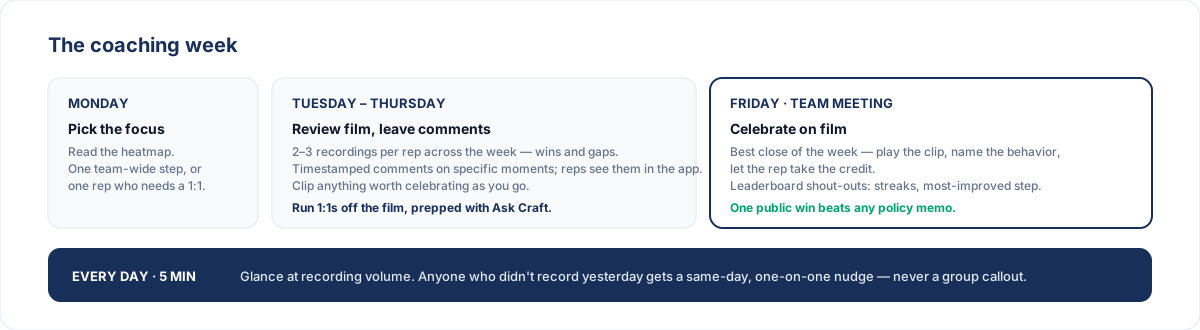
Daily (5 minutes)
- Glance at recording volume by rep. Who recorded yesterday, who didn’t? Chase gaps the same day, individually and casually — “hey, didn’t see the Hendersons appointment come through, everything work okay?” Non-recording is almost always a forgotten habit, a fear of being judged, or a technical snag, and each has a different fix.
- Open your daily coaching brief. Craft emails you each morning what happened across the team yesterday. Read it as a two-decision email: who gets praised today, who gets a nudge.
- Skim any debrief that stands out — an unusually high or low score, a big deal. Don’t comment yet unless it’s a win worth celebrating.
Keep the streak alive. Craft tracks your coaching streak — comment on a recording or review film and the day counts. It’s the same psychology your reps get from practice streaks, pointed at you, because input = output: reps can’t get better if you don’t coach them. The streak card is the fastest honesty check on whether you’re holding up your half of the system.
Daily exists to protect the recording habit. Coaching waits for the weekly block.
Don’t let non-recording slide. If 3 of 10 reps aren’t recording, the other 7 notice and start questioning why they bother. Consistency decides the first month.
Weekly (60-90 minutes)
- Review 2-3 recordings per rep: a mix of high and low scores, not just the problems.
- Leave timestamped comments on specific moments. Reps see these in their app. “Great pivot at 14:20 when she brought up price” beats “good job” every time.
- Pick one highlight clip for the team meeting. A strong moment, a specific behavior, the rep’s name on it. Let them take the credit. One public win does more for adoption than any policy memo.
- Check the heatmap and pick the week’s coaching focus. See Reading Your Dashboards.
- Run your 1:1s off the film, not off memory.
How to run a debrief off a scorecard
This is the core coaching move: a 10-15 minute conversation in a 1:1, built on one recording.
Pick one recording and one step
Use the heatmap to find the rep’s weakest scorecard step, then pick a recording where it shows up. One step per debrief. A conversation about everything is a conversation about nothing.
Open with what went well
Name something specific and real from the film. This isn’t a softener — reps who only hear about their gaps stop listening to the film entirely. Weight early coaching toward strengths; the corrective work lands better once the recording habit is set.
Play the moment
Cue up the 60-90 seconds where the step happened (or should have). Watch it together.
Ask before you tell
“What do you notice?” Reps who diagnose their own film change faster than reps who get diagnosed. Most of the time they’ll name the issue themselves, and your job becomes agreeing and sharpening.
Leave with one commitment
One specific behavior for the next appointment: “present all three options before any price talk.” Next week, find the recording where they did it and say so — publicly if it’s a good one.
The 30-day arc
The cadence tightens over the first month. Each week has one job. Do them in order.
| Week | The one job | What you do |
|---|---|---|
| Week 1 | Every rep records real appointments | Protect the habit. Chase gaps daily. No critiques — reps meet their own film first. |
| Week 2 | You coach from film | Start weekly reviews and timestamped comments. Share the first highlight clip in the team meeting. |
| Weeks 3-4 | The rhythm runs itself | Turn on the habit loops: daily roleplay with streaks, the team leaderboard, a clip in every meeting, reps reviewing their own film before you do. |
By day 30 the test is simple: would the rhythm survive you taking a week off? Reps recording without reminders, wins celebrated in front of the team, new hires learning from real appointments instead of shadow days. If yes, adoption is done and coaching compounds from here.
Scores will look noisy in week one — that’s usually the scorecard needing tuning, not the team. Refine the criteria language in week two before drawing conclusions. See Scorecard Best Practices.