

The dashboard shows a lot. In the first month, almost all of it is noise. Here’s what to actually watch, and when.
Week one: three numbers
Week one is about behavior, not performance. Ignore scores entirely — your scorecard is still being tuned and the sample is tiny.
1. Reps with a real recording. The single number that predicts the rollout. Target: every rep has recorded a real appointment (not just the launch-session roleplay) within the first two or three days. Anyone at zero gets a same-day, individual follow-up.
2. Recording consistency. Recordings per rep against appointments run. A rep recording 2 of 8 appointments is cherry-picking: recording the good ones, skipping the uncomfortable ones that the coaching exists for. Turn on auto-start so consistency doesn’t depend on willpower.
3. Your own review count. Reps check whether anyone is actually looking. If recordings pile up unwatched, the message is “this doesn’t matter,” and volume decays within two weeks. A handful of reviews and timestamped comments in week one — even just on wins — keeps the loop alive.
Month one and beyond: three numbers
Once recording is a habit, shift to the numbers that show coaching is working.
1. Score trend, week over week. Is the team average climbing? Individual scores bounce around; the team trend over 3-4 weeks is the signal. Expect noise in the first two weeks while the scorecard settles.
2. The heatmap. Average score by step and by rep — the fastest coaching-triage view you have:
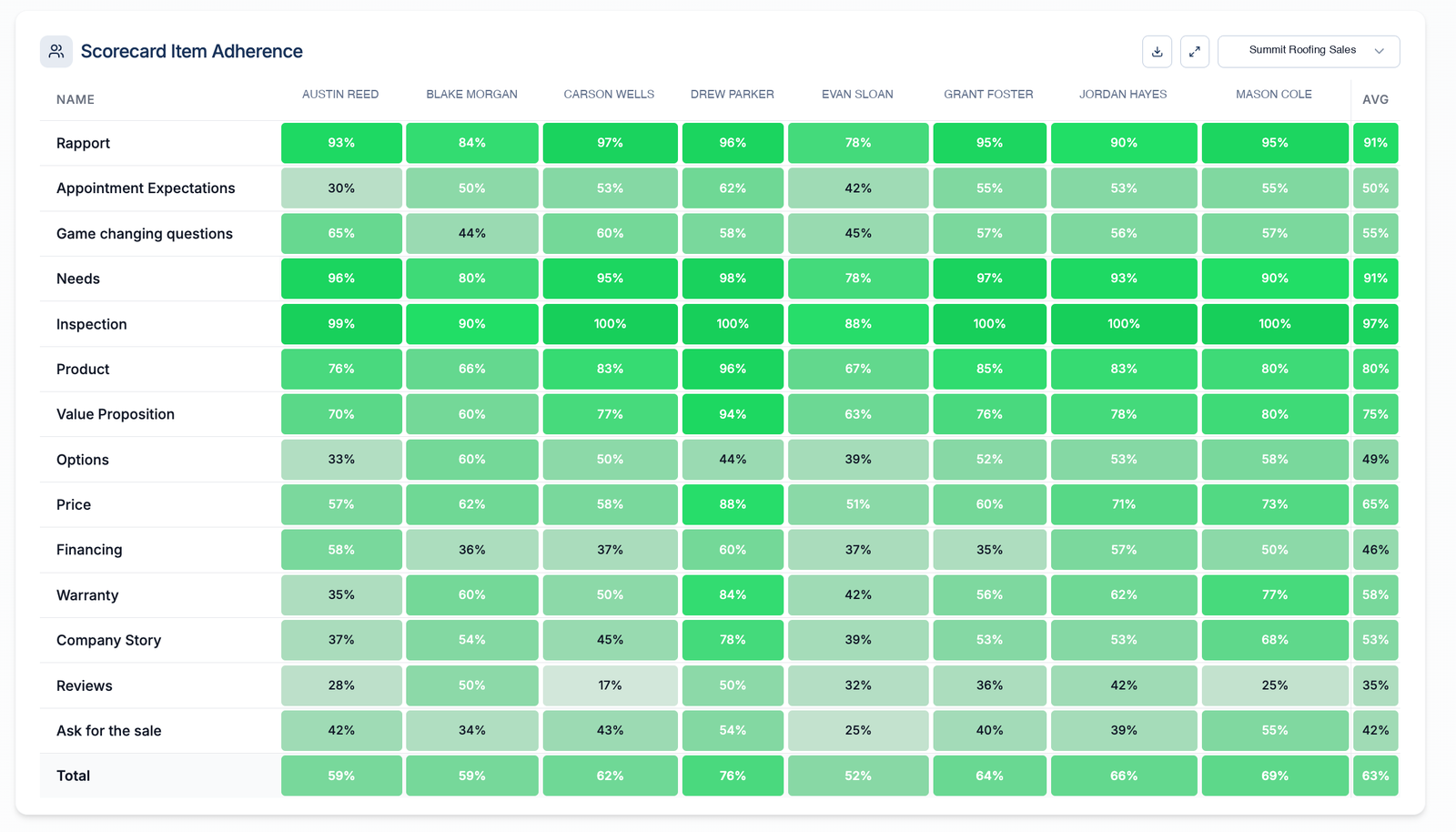
Read it in ten seconds: in this example, Inspection is green across the board (the process step everyone nails), while Options, Financing, and Ask for the Sale run pale for the whole team — those three rows are next month’s training topics, and every 1:1 already has its focus.
- One step red across the whole team = training issue. Cover it in the team meeting, with film.
- One rep red across all steps = individual issue. That’s a 1:1, not a group announcement.
- Green columns = your benchmark reps. Their clips are your training library.
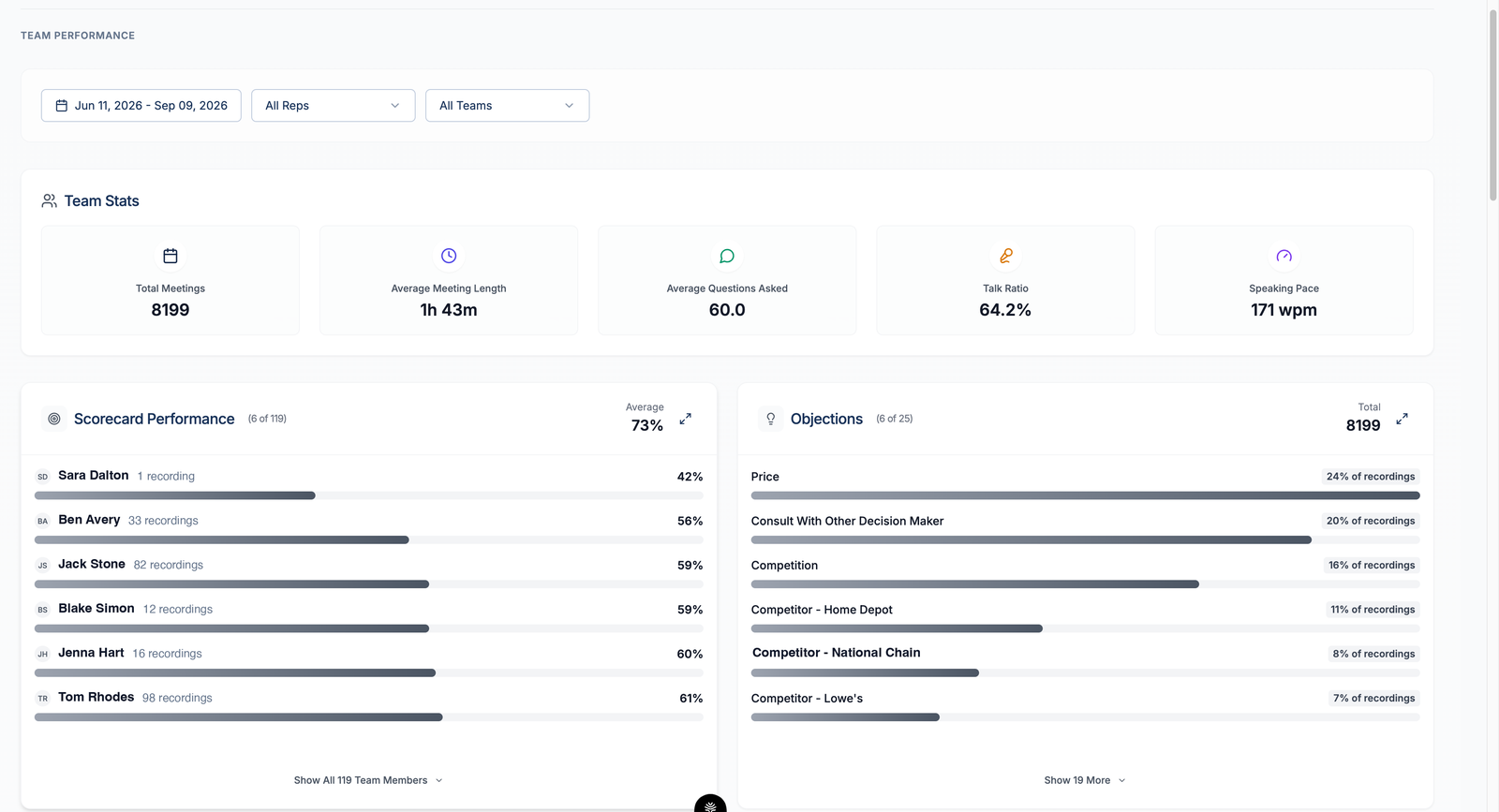
The objections panel deserves a weekly glance of its own: when Price is 16% of recordings and rising, that’s next week’s roleplay scenario choosing itself.
3. Practice and celebration. Roleplay streaks on the leaderboard, and whether a highlight clip made it into every team meeting. These are the habit loops that make the rhythm self-running. See The Weekly Coaching Cadence.
Make the numbers public
Keep a rollout scorecard the whole team sees, reviewed in the weekly meeting: reps recording, reviews done, clips shared, longest practice streak. A visible dashboard keeps the rollout honest and hands you its best stories. The rep whose scores climbed three weeks straight is your next team meeting highlight.
Behaviors first, results second. Close rates follow the behaviors — typically a 10-20% lift as coaching compounds over the following months — but if you watch close rates in month one you’ll conclude nothing is happening right before it does.