
Every scorecard result, key moment, and AI note exists for one purpose: finding the coaching moment. At the end of the day, that is what all of this is about. The workflow is a straight line:
Appointment → key moments → process scorecard → clip → one coaching action
Every step narrows the focus. By the end you’re not discussing “the appointment” — you’re discussing ninety seconds of it and one behavior to change.
The workflow in practice
- Craft flags a pricing moment.
- You jump to the exact timestamp.
- The rep explains what they noticed first.
- You give one actionable adjustment.
- They apply it on the next appointment.
Step 3 is the one managers skip, and it’s the one that matters most. When the rep diagnoses their own film before you speak, the adjustment becomes theirs instead of yours, and it sticks.
Questions that make the rep do the thinking
- “What did you learn from your appointments?”
- “What was a good win, whether you closed the deal or not?”
- “What are the three top things you learned this week?”
- “What will you do differently on the next appointment?”
Notice none of these mention the score. That’s deliberate.
Start from the daily briefing
Every morning, Craft emails you a coaching briefing: yesterday’s numbers, recording coverage by rep, and the appointments worth your attention — each with a possible coaching moment already identified and a one-click path to the recording. It’s the workflow above with the “find the moment” step done for you before your first coffee.
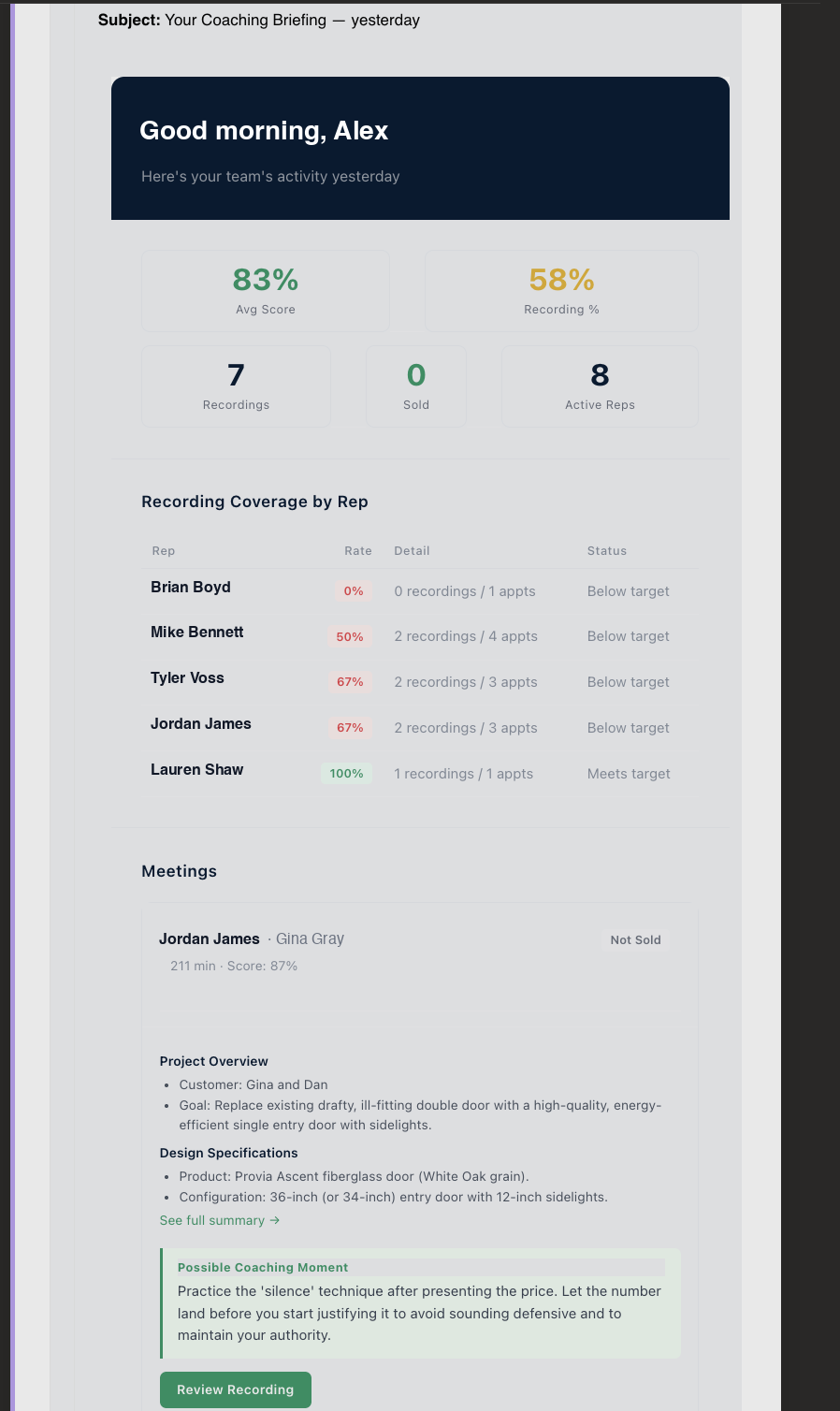
Set when it lands in notification settings — most managers pick 7 or 8am, so it’s fresh as they head into the office.
Leave comments that land
The comment is the coaching. Craft already gives every recording its AI feedback — two things done well, one opportunity — but the comment from you is what tells a rep a human watched their film, and early in a rollout that’s what decides whether they keep recording.
- Coach the wins first. Especially in the first two weeks: reinforce the strong moments before you correct anything. Positive feedback loops are what turn compliance into belief.
- Jump, don’t scrub. Key moments take you straight to the coachable spots — issue discovery, the pricing conversation, the objection — so a review takes minutes, not the length of the appointment.
- Comment on the exact moment. Hover the transcript line, click add comment, and @-mention the rep: “@Chris great work driving the pain on their current process at 31:30.” The timestamp does half the coaching for you.
- Ask Craft to find the coaching. Open Craft Intelligence and ask: “Show me this week’s best coaching opportunities across my team” — let it surface the moments, you supply the judgment.
Keep the score in its place
The score is a signal. The conversation is the evidence. Improvement is the goal.
A score tells you where to look; the film tells you what happened; the rep’s next appointment tells you whether coaching worked. Managers who coach the number (“get your discovery score up”) get compliance. Managers who coach the moment (“listen to what she said right before you quoted — what was she asking for?”) get improvement.
For the meeting-by-meeting mechanics of running this in a 1:1, see the handbook’s debrief structure.
Do this week
Run the five-step workflow once, on one rep, one recording, one moment. End with one written commitment for their next appointment, and check the film next week for whether it showed up.